USGS Lead Data Changes the Question for AGM and EFB Battery Buyers
USGS lead data shows why AGM, EFB and lead-acid battery buyers should verify source mix, secondary lead, alloy quality and continuity plans.
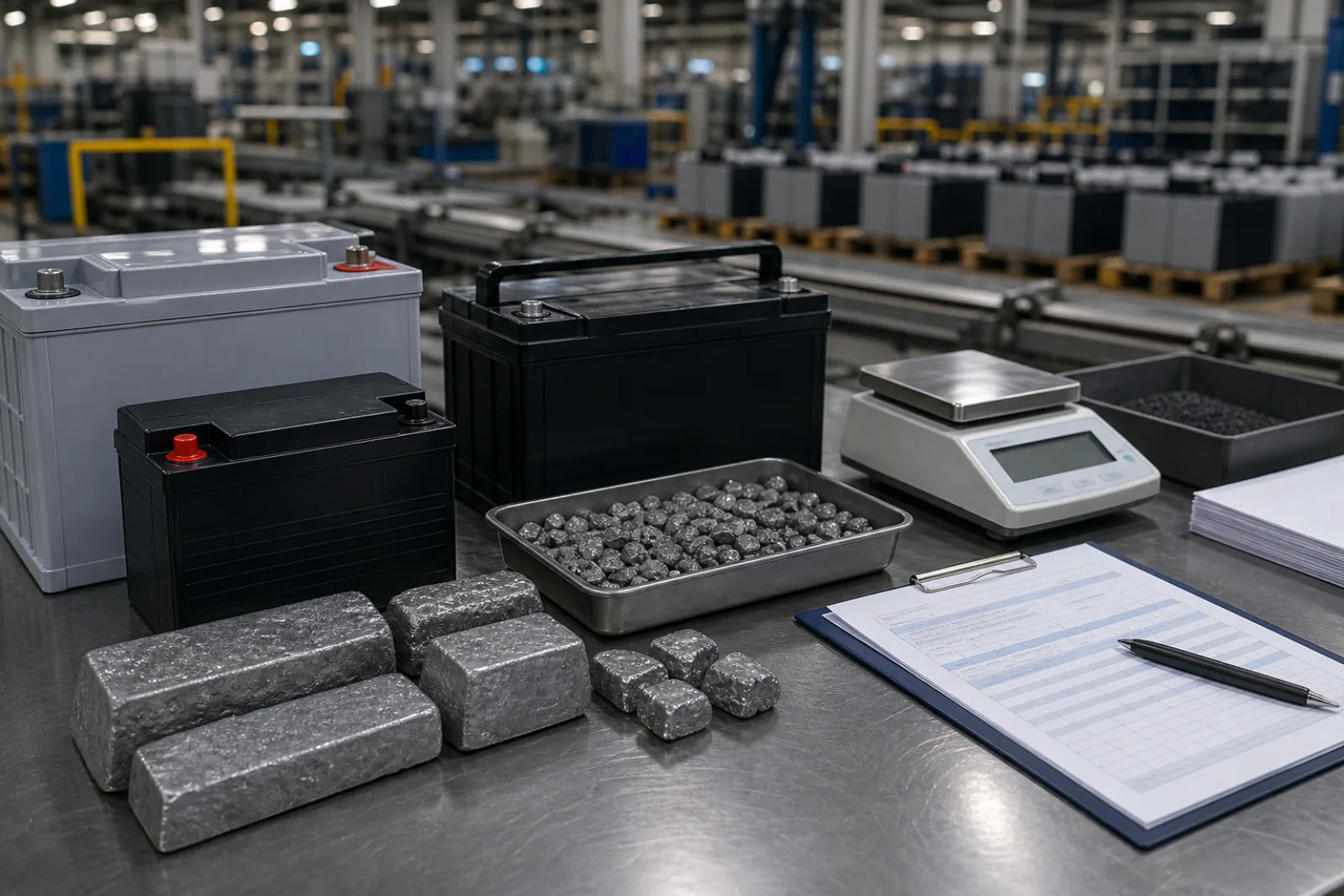
The latest useful signal for lead-acid battery buyers is not a new vehicle model or a short-term lead price move. It is the way lead is being discussed in official supply-risk language. The U.S. Geological Survey’s materials on the 2025 list of critical minerals, together with the agency’s Mineral Commodity Summaries 2026, keep lead in a strategic materials conversation that battery buyers should not ignore.
For buyers of AGM, EFB, automotive replacement, backup-power, marine, and renewable-storage batteries, the point is not to panic about lead availability. It is to change the procurement question. A battery quotation should no longer be judged only by capacity, cold-cranking performance, warranty, and price. It should also answer how the supplier manages lead source mix, secondary lead access, alloy quality, and continuity under disruption.
Why Critical-Mineral Language Matters
Lead-acid batteries are sometimes treated as a settled technology because the chemistry is mature, the recycling system is well established, and the supply chain is familiar. That familiarity can hide risk. When lead is discussed as a critical material, buyers should read it as a reminder that a mature chemistry still depends on a material system with mining, smelting, recycling, transport, regulation, and price exposure.
The USGS data does not say that every battery buyer faces a shortage. It does something more useful: it gives procurement teams a reason to ask whether a supplier’s lead strategy is documented. A supplier may have access to primary lead, secondary lead, tolling partners, local smelters, or open-market material. Those are not the same risk profile.
This matters most for buyers who need stable replacement supply. AGM and EFB batteries serve vehicles with higher electrical loads, start-stop systems, and aftermarket channels where downtime quickly becomes a customer problem. Backup-power buyers have a different pressure: they need predictable maintenance, bank replacement planning, and consistent quality across batches.
Demand Has Not Disappeared Behind EV Headlines
The public battery story often jumps straight from combustion engines to lithium-ion traction packs. That misses the low-voltage layer. Battery Council International, citing CRU analysis, has reported that North American automotive lead battery demand remains on a growth trajectory, with AGM gaining share in the market. Even where vehicle platforms change, low-voltage batteries, replacement channels, and auxiliary functions do not simply vanish.
For export buyers, that means lead supply is not an abstract mineral policy topic. It sits inside product availability for SLI, AGM, EFB, heavy-duty, marine, standby, and low-voltage support applications. The stronger the demand for higher-specification batteries, the more important alloy quality, plate consistency, formation control, and supplier continuity become.
That does not make every lead-acid supplier risky. It means buyers should separate an old chemistry from an old procurement habit. Mature products still need modern evidence.
The Five Questions Buyers Should Ask
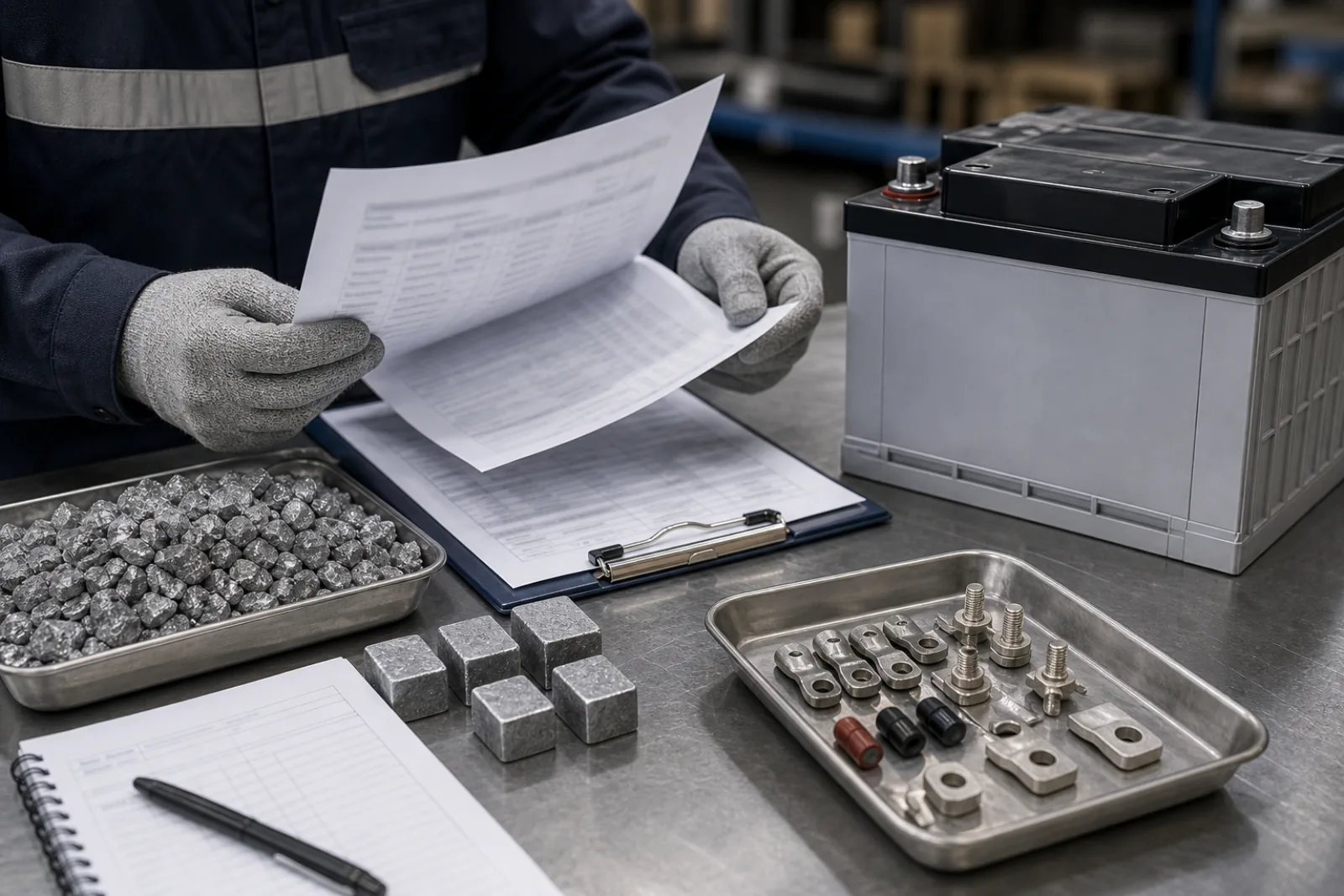
The first question is source mix. Does the supplier rely mainly on primary lead, secondary lead, contracted smelting, or spot-market purchases? A balanced source mix can reduce exposure to one disruption point, but only if the supplier can explain the route.
The second question is secondary lead access. Lead-acid recycling is a real strength of the chemistry, but recycled material should not be treated as a vague sustainability claim. Buyers should ask whether secondary lead is available through owned operations, qualified partners, contracted recyclers, or open-market purchases, and whether that access supports the product line being ordered.
The third question is alloy and quality control. Battery performance depends on more than lead volume. Grid alloy, paste quality, impurity control, formation consistency, and terminal material all affect durability. If a supplier changes material sources, the buyer should know how incoming material is tested and how alloy specifications are protected.
The fourth question is demand fit. A basic flooded battery, an EFB unit for start-stop vehicles, an AGM battery for higher electrical loads, and a standby battery for backup power do not create the same risk. Buyers should map the supplier’s material strategy to the actual application rather than accepting one generic lead-acid answer.
The fifth question is the disruption plan. Lead supply can be affected by smelter availability, transport, environmental rules, recycled feedstock collection, energy cost, and regional demand. Buyers do not need confidential supplier purchasing data, but they do need a credible explanation of how production continues when one route tightens.
The Procurement Lesson
The defensible conclusion from the USGS signal is simple: lead-acid battery sourcing is no longer just a mature-product exercise. It is a material-continuity exercise.
For AGM and EFB buyers, that means supplier evaluation should include lead strategy alongside electrical performance. For backup-power buyers, it means replacement planning should include batch consistency and continuity evidence. For importers and private-label teams, it means a low price without material-source clarity may hide future delivery risk.
Lead-acid batteries remain commercially important because they combine established production, broad application fit, and mature recycling. Those strengths are real. They become more valuable when a supplier can prove how the material system behind the battery is managed.
In 2026, the better buyer question is not simply “Can you supply this battery?” It is “Can you show how your lead supply, secondary material access, alloy quality, and continuity plan support this battery over the life of the program?”